
What might emerge when an entrepreneur centres their business around Indigenous knowledge, living in relationship with the Land, and caring for one another?

When Brenda Dragon’s father passed away in 2012, she began thinking more deeply about how the rejection of wild fur had affected her family and many other people across the North. Trapping was not simply a way of making a living. It was connected to culture, traditional knowledge and a relationship with the Land that had been carried through generations.
“It changed the way people saw their way of making a living and the way of practicing their culture, and the attack was confusing to people who have always seen themselves in relationship with the Land. It impacted my parents personally.
Our family has a long history of trapping wild fur on both sides. My father is French Canadian. His family settled in northern Alberta and had been trapping for generations. My mother’s family lived in northern Saskatchewan and the Northwest Territories. Her people had lived nomadically and trapped in the northern boreal forest since the beginning.”


Four years later, a practical way to act on that intention emerged through Brenda’s snowboard-loving son, Joel. He kept coming home from winter adventures in -40C weather feeling cold despite his high-tech gear. Brenda knew what to do: she put fur inside his mittens and boots.
The complaints stopped.
“This idea that innovation must be technological, synthetic or a new invention is not the whole picture. What I wanted to bring back and innovate around has been with us since the beginning of time but is overlooked by this dominant economy. It comes from deep knowledge and understanding.”
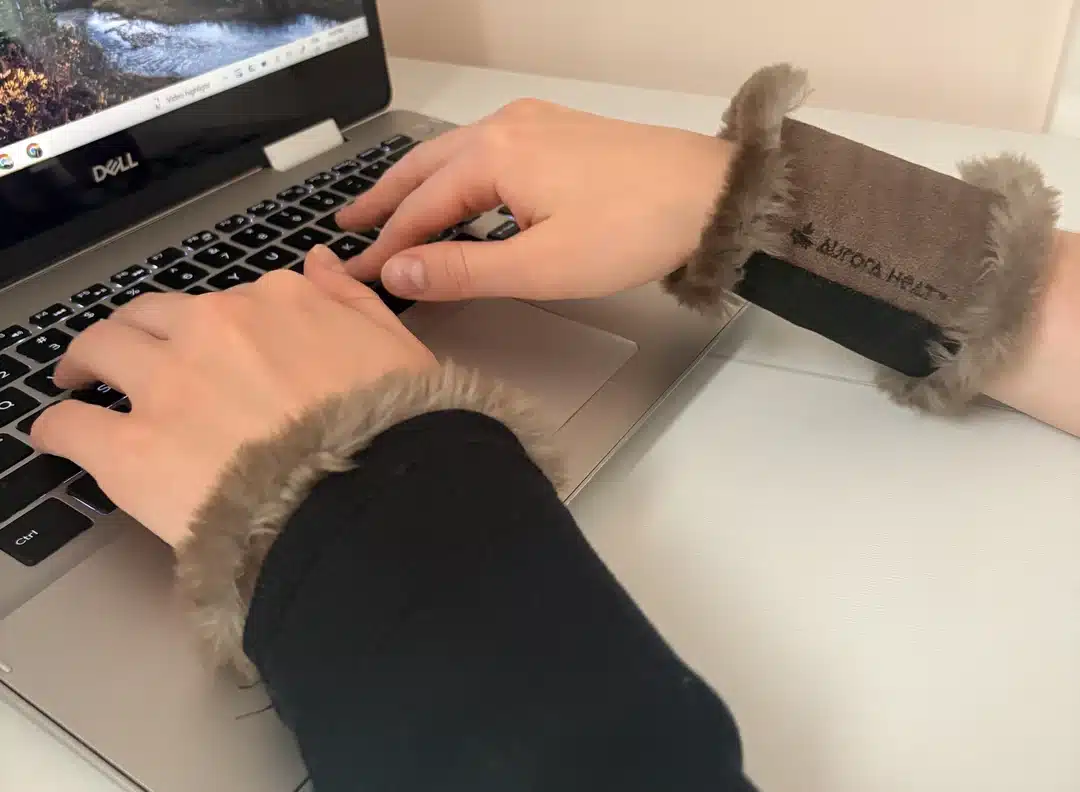
Aurora Heat officially launched in 2016 in Brenda’s hometown of Fort Smith, Northwest Territories. She had returned home to be with her mother and began working from the basement of her childhood home, designing and making reusable hand and foot warmers from one of the warmest natural materials she knew: beaver fur.
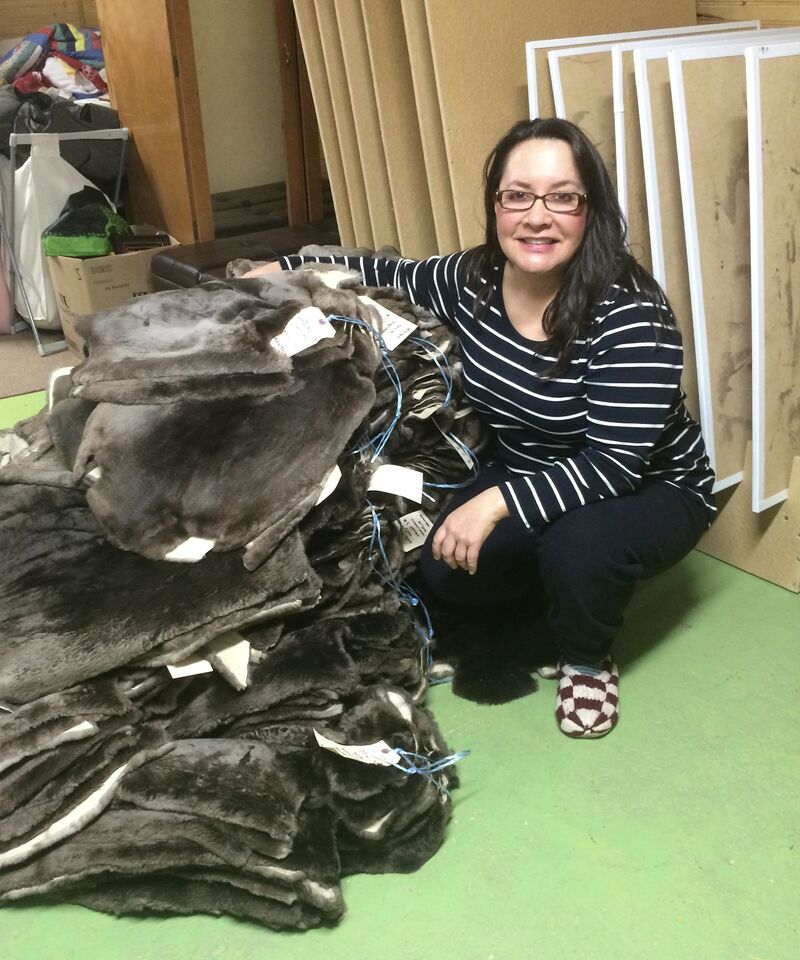


From the beginning, Aurora Heat was about more than creating a product. Brenda wanted people to understand why wild fur had been used in the North for generations and what that knowledge could still offer today.
“I could see that part of my role was to explain how the disconnect between people and nature happened and how we could reconcile living in harmony with nature by using materials we were always meant to use.”
Over the decade that followed, Aurora Heat grew from those early beginnings into an established Indigenous-owned social enterprise. The company expanded its products, built a team in Fort Smith, and reached customers across Canada and internationally. Throughout that growth, Brenda continued exploring how traditional knowledge and natural materials could be carried forward in new ways.
The journey was not without resistance. As Aurora Heat began advertising more widely, Brenda encountered strong opposition to the use of wild fur.
“The language that came at us was brutal. It used to keep me up at night.”
Over time, she began distinguishing between hostility and genuine questions.
“I became more confident as people began showing me that they could actually carry different thoughts. If I could see a question in their remarks and they weren’t being rude, I would try to explain and answer. People have learned by reading those conversations.”
What first felt like resistance became another opportunity for education.
As the business grew, Brenda also wanted to create the kind of flexible workplace she had valued in her own life, particularly for women balancing work with family and community responsibilities.
“I wanted flexible employment for myself and for other women, and have been very successful at creating that. We don’t punch the clock, and I pay attention to their family needs. I involve everyone in my thinking. But caring is also holding boundaries.”
Over the years, many hands have helped shape Aurora Heat. Brenda sees the knowledge, work and care people bring as fundamental to what the business has become.


In 2022, Aurora Heat was selected as a Coralus Venture. Brenda entered the community unsure of what she might find in an organization that initially appeared large and predominantly white. What she found was a willingness to learn, engage and have difficult conversations about reconciliation.
“I saw that Coralus was making a genuine effort to engage and bring people along in a reconciliation journey. When I got into rooms with other Coralus people, I felt an authentic curiosity and a desire to be supportive.
They wanted to understand more about Indigenous peoples, and a lot of them hadn’t really been on the reconciliation education path for very long. They seemed willing to be vulnerable, and I thought, you know, that’s a great place to start.
My first experience of being with other Indigenous female entrepreneurs was through Coralus, and also through Fireweed, an Indigenous women’s business incubator offered during the pandemic.”
Coralus also brought valuable mentorship and relationships.
“MJ was fantastic. She helped me understand more about my strengths, where I could grow and how I lead. I learned a tremendous amount about myself, and that influenced my leadership, decision-making and how I build a team.”
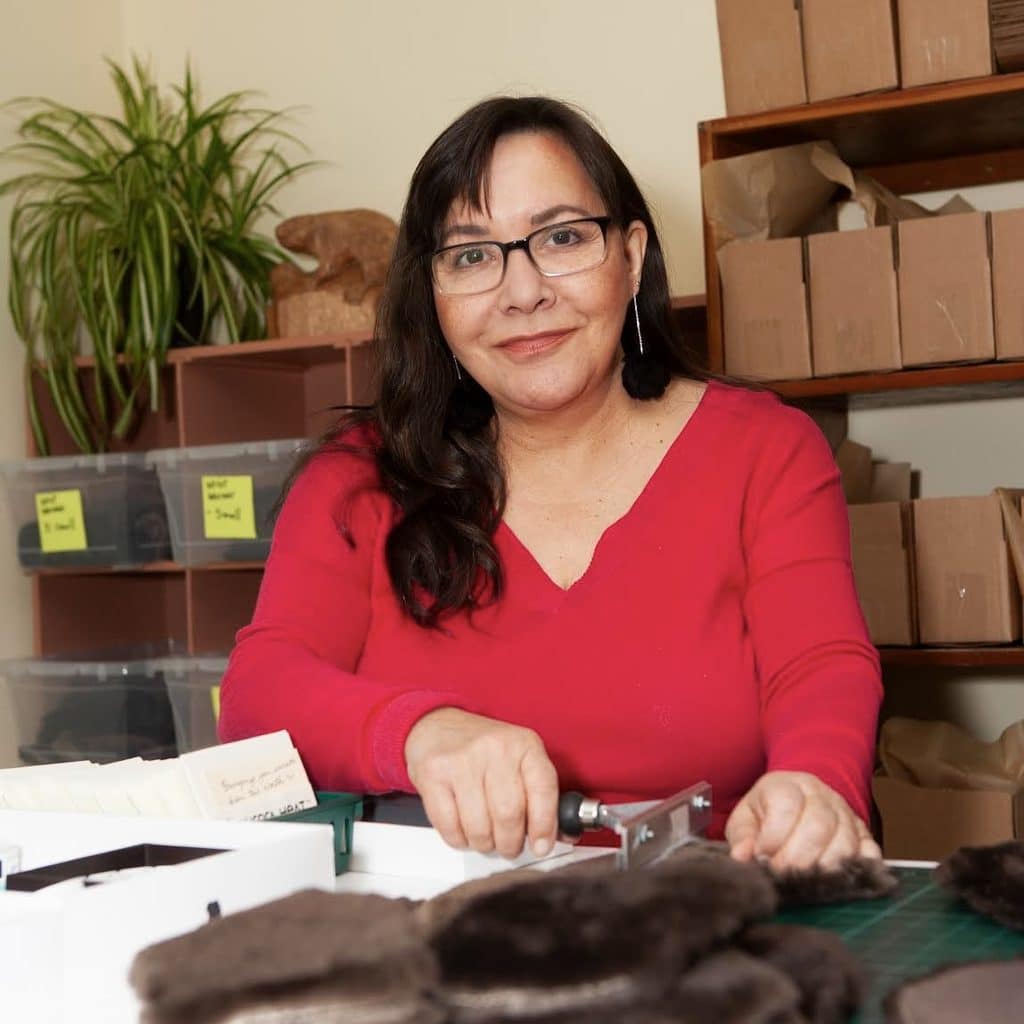
Photo by The Globe and Mail
That same belief in bringing traditional knowledge forward continues to shape Aurora Heat’s next stage of innovation.
For several years, Brenda has been developing NEZŲ, a natural sensory support made with sheared beaver fur.
“I believe NEZŲ has the potential to make a real difference for people. It brings us back to common values around caring for ourselves, caring for each other and caring for the Earth.”
Brenda’s Indigenous worldview also shapes how she understands her relationship with Aurora Heat.
“I am the caretaker of Aurora Heat. I am responsible, but I don’t really feel like the owner.”
_________
Photos courtesy of Brenda Dragon
Next: